Overview:
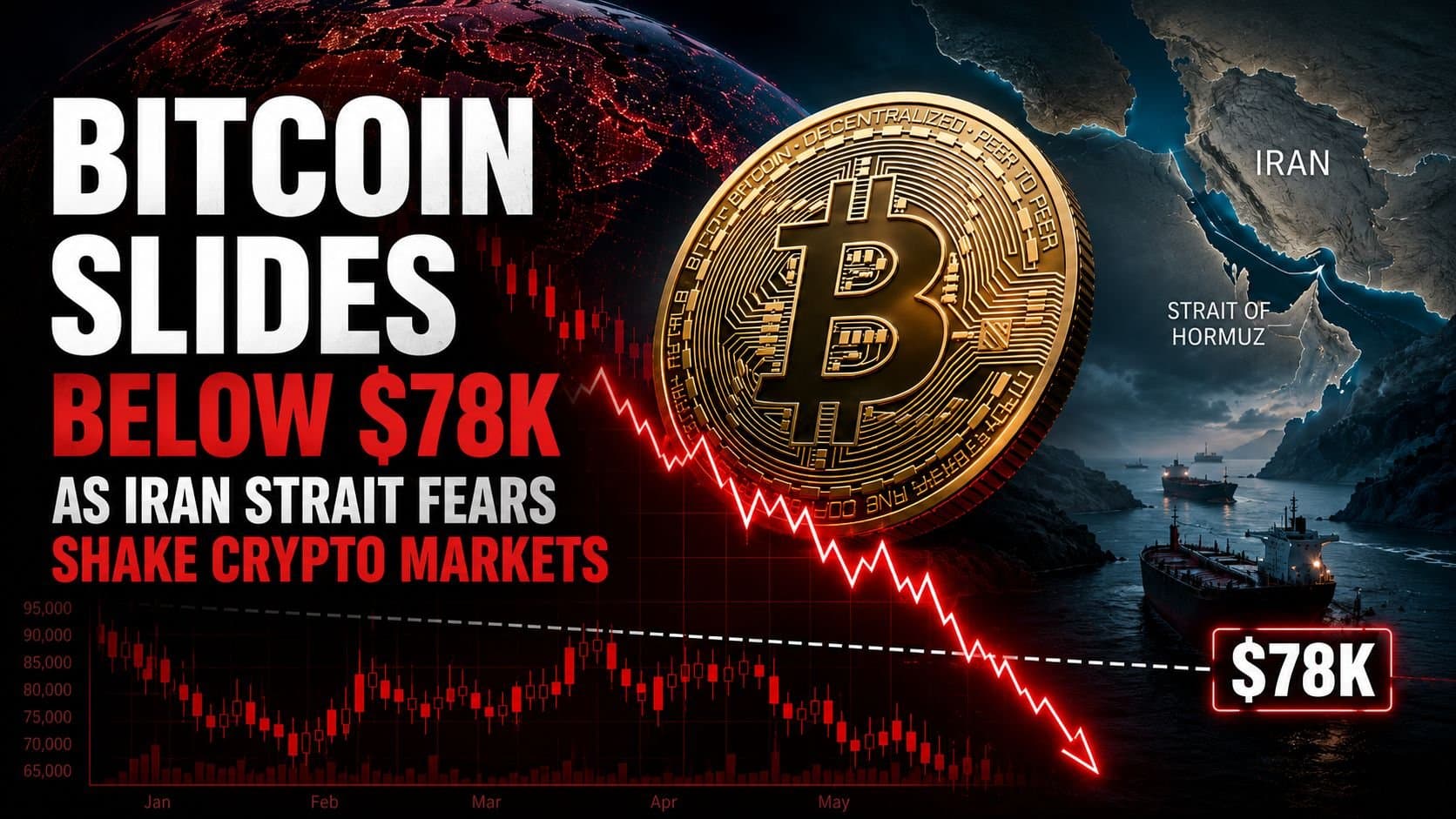
Bitcoin dropped to an intraday low near $77,711 on Saturday amid Iran-related geopolitical concerns
U.S. spot Bitcoin ETFs, including BlackRock's IBIT, recorded roughly $290 million in net outflows on May 15
Traders are now watching the $76,000–$78,000 zone as a key short-term support range
Bitcoin ended the week on a shaky note, slipping below $78,000 as a mix of geopolitical risk and institutional selling drained momentum from the market. The latest trigger came from Iran's announcement that it intends to charge commercial vessels for passage through the Strait of Hormuz, which is a critical chokepoint for global oil supplies.

Iran's Strait of Hormuz Plan Rattles Risk Assets
Iran's plan to manage traffic through the Strait of Hormuz and requiring vessels to cooperate with its authorities, raised fresh concerns about energy flows and shipping costs globally. Western governments have questioned the legal basis of any such toll system, keeping the dispute very much alive.
Bitcoin traded near $78,228 at the time, with an intraday low around $77,711, while sellers maintained pressure across major crypto assets. The move reflected how closely crypto markets are now tracking geopolitical headlines.
ETF Outflows Add to the Selling Pressure
Institutional activity made things worse. U.S. spot Bitcoin ETFs posted around $290 million in net outflows on May 15, with no fund recording positive inflows during that session.
BlackRock's IBIT is a major driver of institutional BTC demand and also saw notable selling pressure during the week. When funds like IBIT start shedding positions, it removes one of the market's key sources of buying support.
ETF flows have become a critical signal for Bitcoin's market strength, and when outflows accelerate, traders lose a major source of upside momentum.
Also Read: Stocks Slide as Middle East Tensions Rattle Wall Street and Push Oil Higher
Where BTC Goes From Here
Bitcoin had briefly pushed above $82,000 earlier in the week after the Senate Banking Committee advanced the CLARITY Act, a move that briefly lifted regulatory optimism. Profit-taking quickly reversed those gains.
Traders are now closely watching whether buyers can defend the $78,000 level. A hold there could slow the decline and invite dip-buying, while a drop below $76,000 would likely shift attention toward $74,000 and lower liquidity zones.
Some traders see the current decline as a potential bear trap, noting that negative funding rates and rising open interest suggest a heavy short position build-up a setup that can lead to a fast reversal if prices move higher.
Conclusion
Bitcoin's short-term path remains tied to geopolitical developments, especially any escalation around the Strait of Hormuz. Until ETF flows stabilize and macro pressure eases, traders appear cautious. The $76,000–$78,000 range will likely define market direction in the near term.
Disclaimer: This article is for informational purposes only and does not constitute investment advice — always conduct your own research (DYOR) before making any financial decisions.